
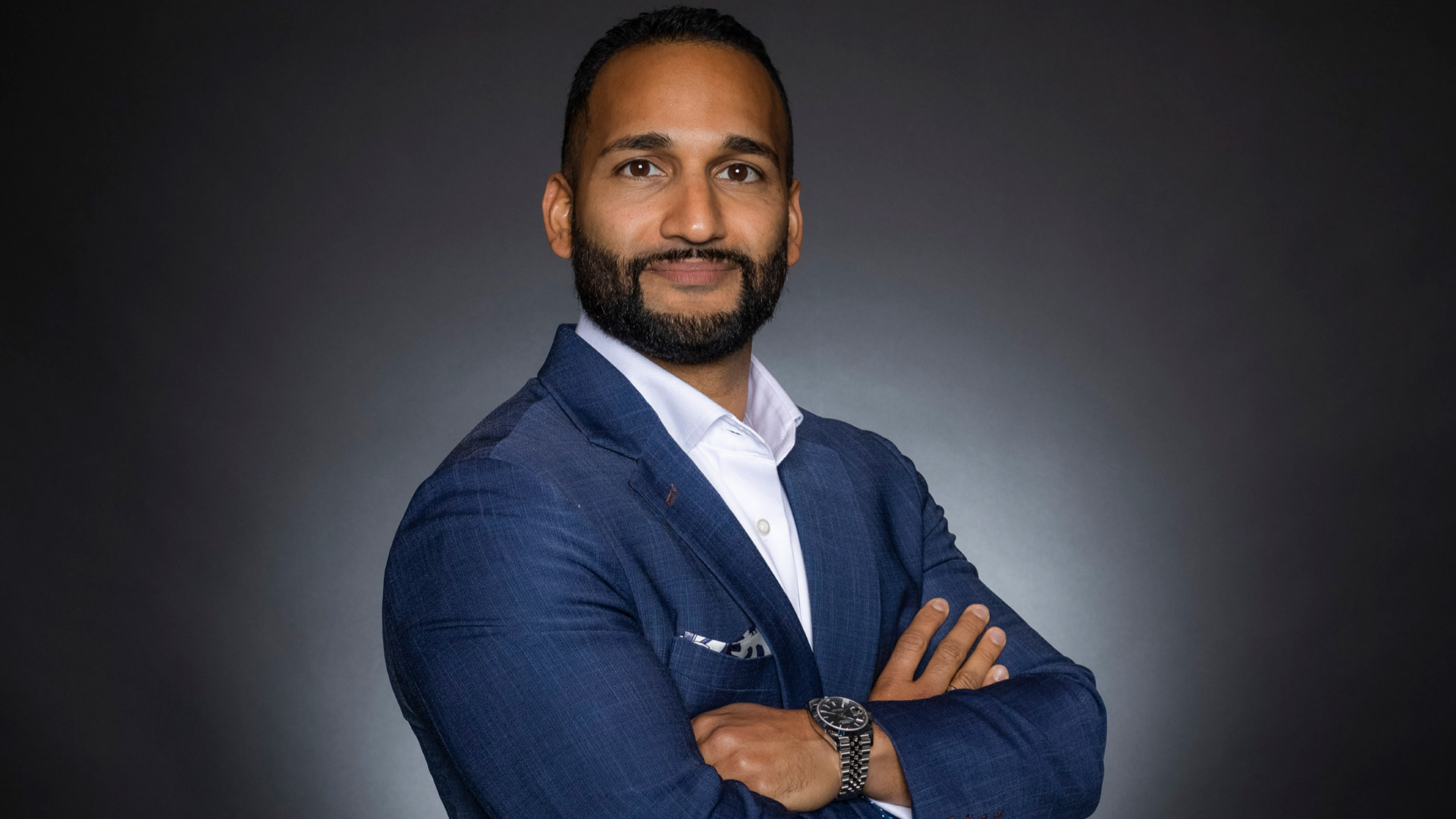
In 2016, fresh off completing his residency at the VA Medical Center in Salisbury, North Carolina, Dr. Benjamin Thayil returned home to Florida with a bold move: he purchased a private optometry practice.
He renamed it Lifetime Vision & Eye Care.
But his goal wasn’t simply to provide eye exams or sell frames. It was more ambitious than that.
He wanted to build a place where patients love to be seen, staff love to work, and doctors love to practice.
What he didn’t have at the time was formal business training.
“Entrepreneurs like myself,” Ben says, “it’s a school of hard knocks.”
Like many clinicians-turned-owners, he had the credentials: a Biology degree from the University of South Florida, a second Bachelor’s in Vision Sciences, and a Doctorate of Optometry from Nova Southeastern University. But, building a sustainable business required a completely different skill set.
And in the early years, the cracks showed.
From Uncertainty to Ownership
When Ben first acquired Lifetime Vision & Eye Care in 2016, the numbers told a stressful story.
Patient volume fluctuated wildly. Some days were full; others were painfully quiet. For a healthcare practice, inconsistency isn’t just inconvenient, it’s destabilizing. Revenue becomes unpredictable. Payroll feels heavy. Marketing decisions stall. Growth turns reactive instead of strategic.
“I was never the mentality like, ‘I’ll open a couple of hours and work somewhere else,’” Ben explains. “It was boots to the ground. All in.”
But grit alone doesn’t create infrastructure. But grit alone doesn’t create infrastructure. Systems, forecasting, leadership development, financial modeling — those skills weren’t taught in residency, and the early years highlighted just how steep the learning curve could be. Patient care came naturally; running a sustainable, scalable business did not.
By 2020, the pressure of that gap became impossible to ignore, especially when the pandemic hit.
COVID intensified every existing weakness. Across the country, practices furloughed teams and slashed expenses. The pressure wasn’t only financial. It was existential.
Ben made a counterintuitive decision. His priority would not be protecting margins—it would be protecting people.
“If I could retain my staff,” he says, “then the business would take care of itself.”
Payroll is often the largest fixed expense in a professional practice. Cutting staff would have immediately eased financial strain. But Ben believed the long-term cost — lost culture, lost training, lost trust — would be greater.
So instead of retreating, he reinvested in leadership.
During the slower months of 2020, he began leading weekly values-based development sessions with his team. They discussed communication, boundaries, ownership, forgiveness, and personal growth. These were not operational checklists. They were transformational conversations.
In one session on boundary-setting, a team member realized she could confidently set expectations with patients nd in her own life. That shift improved workflow, reduced friction, and strengthened the patient experience.
Ben began to see something powerful: Culture drives performance. Stronger communication improved efficiency. Clearer expectations reduced bottlenecks. Confidence elevated care. Revenue followed structure.
But while the business was stabilizing, something else was surfacing.
Burnout.
The Inflection Point
Even as performance improved, Ben quietly evaluated practice valuations year after year. He believed a healthy business should always be sellable — a disciplined owner’s mindset.
But at one point, the interest in selling wasn’t strategic. “I was over it,” he says candidly. “Exhausted. Burned out.”
The fatigue wasn’t about patient care. It was about identity. When revenue dips feel personal, when staffing challenges feel like failure, when leadership feels isolating — ownership becomes heavy.
That is when mentorship entered the story.
In September 2020, Ben began working with Dr. Scott Colonna, founder of Insight Business Advantage.
“The best mentor is someone who’s done it before you and is willing to share,” Ben says. “Scott does that in such a great way. He’s not heavy handed. He doesn’t come in and tell you what you’re doing wrong. He asks better questions.”
Instead of prescribing tactics, Scott challenged assumptions.
Who are you outside the business?
What role do you actually want to play?
Are your daily decisions aligned with the life you say you want?
“He helped me separate who I am from what the business is doing,” Ben explains. “That was huge.”
That separation changed everything.
For many entrepreneurs, financial stress becomes identity stress. Slow months feel like personal failure. Staffing friction feels like incompetence. Mentorship reframed the narrative. The goal was no longer survival or exit.
It was alignment.
Through those conversations, Ben identified his life word: freedom.
Freedom to design his mornings with his wife, Sarah, and their sons, Matthew and David. Freedom to avoid the generational pattern he witnessed growing up — a hardworking father still running his CPA firm in his seventies, rarely home. Freedom to own the business without being consumed by it.
So he rebuilt differently. Most days, he doesn’t enter the clinic until 10 a.m. Mornings are family time. That decision alone redefined ownership.
With alignment restored, the business stopped feeling like a trap and started feeling like a tool. “It became fun again,” he says.
A Business That Serves Life
Clarity translated into results.
From June 2024 to June 2025, Lifetime Vision & Eye Care doubled patient volume year-over-year — even during the traditionally slower summer season in optometry.
That kind of growth strengthens everything: revenue stability, cash reserves, reinvestment capacity, and long-term valuation.
Today, Ben leads a five-person team, including himself in the doctor role. But his vision has evolved. The next chapter isn’t about personally seeing more patients.
It’s about building infrastructure.
He envisions department heads and operational leaders managing daily functions. He anticipates outgrowing his current space, purchasing property, and strengthening the balance sheet through real estate ownership.
“I can help more patients by running a really good business,” he says. “If I’m just seeing one patient at a time, I’m helping one patient at a time.”
That shift, from producer to CEO, is the inflection point between income and enterprise.
Ben now mentors other doctors, inspired by leadership thinkers like John C. Maxwell. His advice is simple and direct:
Define why you want to own a practice, beyond income or ego.
And ask for help.
“Never fake it till you make it,” he says. “Never pretend you’re doing okay.”
During the pandemic, Ben and his wife adopted a golden retriever named Macy despite discovering they were both allergic. Claritin, air filters, and stubborn love carried them through.
There’s a metaphor there.
Ownership can be uncomfortable. It can test patience. It can make your eyes itch. But when the mission is clear, you adapt.
Lifetime Vision & Eye Care isn’t just growing in patient count. It’s growing in maturity — structured leadership, defined values, financial intentionality, and long-term asset strategy. All anchored in one guiding principle: Build a business that serves your life not the other way around.
For Ben Thayil, that means freedom.
And increasingly, it means proving that profitability and purpose are not competing goals.
They’re aligned ones.

4 KEY TAKEAWAYS YOU CAN USE TODAY
Define Your “Why” Before You Scale: Money is not a mission. If you don’t clearly define why you’re building your business, burnout will eventually make decisions for you.
Protect Your Team, Protect Your Business: During crisis, Ben prioritized retaining staff. Investing in people stabilized operations and ultimately supported revenue growth.
Don’t Fake Competence, Seek Mentorship: There is no badge of honor in struggling alone. Strategic mentorship shortens learning curves and protects profitability.
Design for Freedom, Not Just Income: Schedule structure, operational systems, and leadership development are financial strategies. If your business can’t run without you, it’s not scalable and it’s not sellable.