
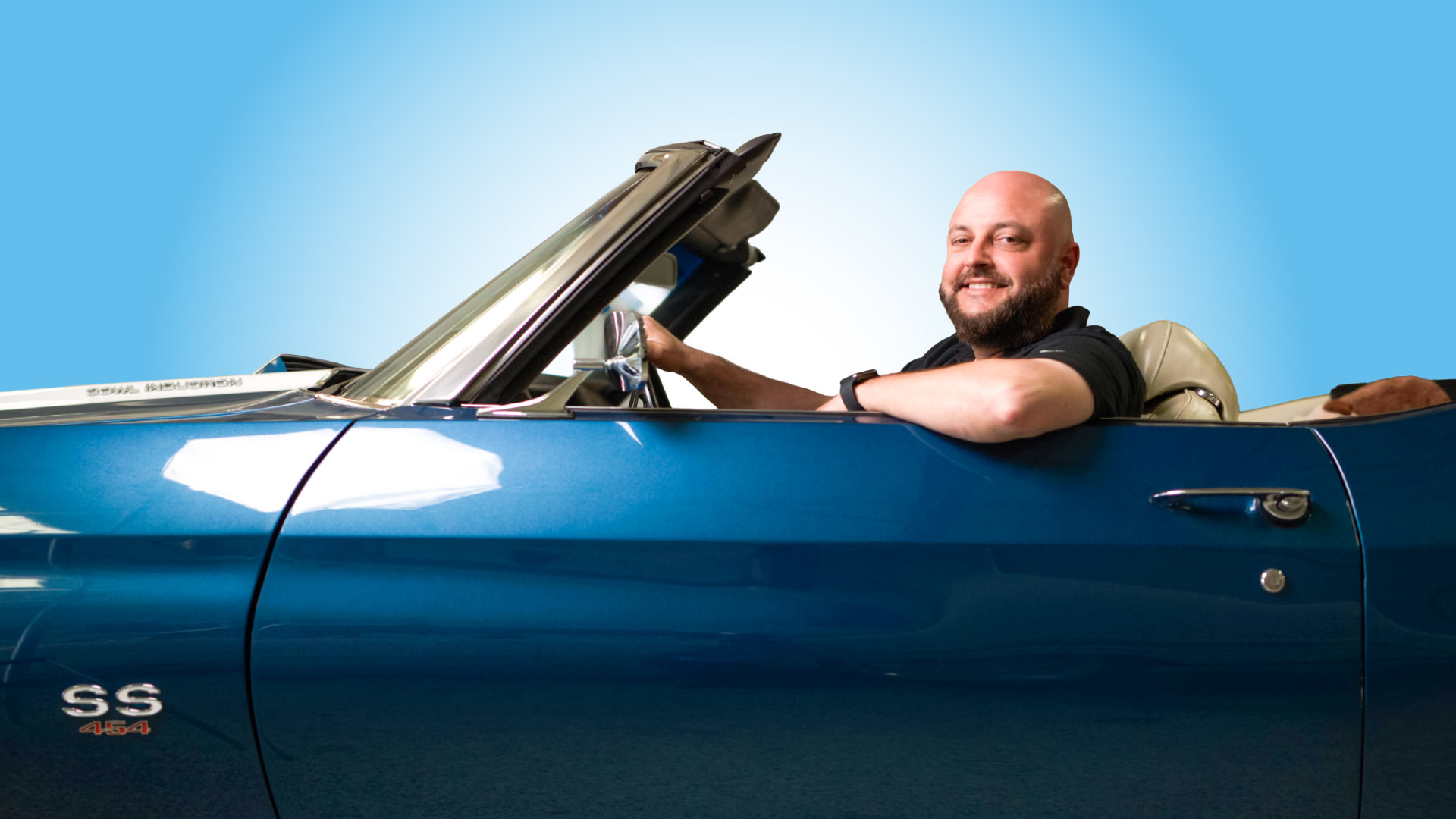
On any given morning in Winter Garden, Florida, the low rumble of a big-block V8 rolls across Story Road before the showroom doors even open. Chrome flashes under fluorescent lights as mechanics move between lifts. In another building, a customer studies a vintage convertible like a museum piece, tracing the lines of a body style that hasn’t been produced in half a century. Classic cars have a way of stopping time, and at Past & Present Motor Cars, that sense of nostalgia is the entire business model.
The company began with a simple idea: there will always be people who want to own a piece of automotive history. For founder Jack Lazinsk, that belief was never theoretical. It was personal. Cars were part of the rhythm of his life long before they became the foundation of a company.
Today, the dealership sells collector vehicles to buyers across the country and around the world. The operation spans multiple buildings, employs more than 20 people, and maintains a growing reputation among enthusiasts for sourcing rare and carefully maintained vehicles.
But the road from a modest warehouse to a multi-building enterprise was not a straight line. It was a journey shaped by risk, timing, relentless curiosity, and eventually, the financial discipline required to transform passion into a sustainable business.
A Passion Born in the Garage
Some entrepreneurs can pinpoint the exact moment they fell in love with their industry. For Jack, the passion for cars was simply always there. “I think you’re either born loving cars or you’re not,” he says.
His fascination traces back to family history. Jack’s grandfather, also named Jack, owned a Chevrolet dealership in the 1950s and 1960s. Although Jack never met him, the legacy left an impression. His parents also shared the enthusiasm, filling the driveway with Corvettes, Camaros, and other Chevrolet classics that represented the golden age of American muscle.
By the time Jack was an adult, the fascination had turned into an active hobby. He spent years buying, restoring, and occasionally selling classic cars, slowly developing an eye for quality and authenticity. Still, the idea of turning that passion into a business felt distant. His professional life followed a much more conventional path.
For nearly two decades, Jack worked in corporate homebuilding, holding positions with major national builders including KB Home, Lennar, and Richmond American Homes. The work was stable and structured. The career path was predictable. Yet over time, the classic car hobby kept pulling him back.
What began as an occasional side purchase eventually evolved into something larger: a recognition that the collector car market was more than nostalgia. It was a viable niche.
The spark that turned that realization into a business came from an unlikely meeting.
The Leap Into Entrepreneurship
Jack met his future business partner, Jeff Losapio, while attempting to buy a car from him: a black 1970 Chevelle with ivory interior. The meeting did not begin with a handshake and shared vision. In fact, it started with an argument.
“I made him a low offer,” Jack recalls with a laugh. “He told me to leave.”
Despite the rocky introduction, the two men stayed in touch. As they talked more, they realized they shared the same perspective on classic cars, particularly the iconic Chevelle models from the late 1960s and early 1970s. They also recognized something else: there was a dedicated market for these vehicles, and very few dealerships were specializing in them with the level of care serious collectors expected.
Eventually, the conversation turned into a bold idea. What if they built a dealership focused specifically on classic American cars?
The decision required both men to leave stable careers. Jeff stepped away from his city job. Jack left the corporate homebuilding world at the age of 38. The leap might have felt reckless if not for the encouragement of the people closest to him.
“My wife and my mom both said the same thing,” Jack remembers. “If it doesn’t work, you can always go back to what you were doing.”
With that reassurance, he took the risk.
Past & Present Motor Cars officially opened on June 15, 2018, in a small warehouse near Plant Street in Winter Garden. The location held 13 cars inside and a handful outside. It was modest by dealership standards, but for Jack and Jeff it represented the beginning of something they believed could grow.
What they could not have predicted was how quickly that growth would accelerate.
Growth, Opportunity, and the Power of the Story
In its earliest months, Past & Present Motor Cars operated like many young businesses. Jack and Jeff wore multiple hats, balancing inventory searches, sales conversations, and the endless logistical details of running a dealership. Then, just as the company was preparing to expand into a larger showroom, the global economy shifted in ways no one expected.
The COVID-19 pandemic disrupted nearly every industry in the country. For Past & Present Motor Cars, the timing was unnerving. The partners had just signed a lease on a significantly larger facility. “We were looking at a five-thousand-dollar rent payment,” Jack says. “At the time, that felt like a million dollars.”
Rather than retreat, the company pivoted. The showroom switched to an appointment-only model, allowing customers to explore vehicles in a more personalized environment. At the same time, a surprising trend emerged across the country. Consumers who had stopped traveling and spending on experiences began investing in personal passions. Boats, recreational vehicles, and collector cars surged in demand.
For Jack and Jeff, the result was an unexpected boom.
Sales climbed rapidly, at one point reaching roughly forty vehicles a month, and with that growth, new opportunities. The company began expanding inventory, increasing its service capabilities, and ultimately purchasing property rather than leasing space. By 2022, Jack had acquired several buildings on Story Road, dramatically expanding the company’s footprint.
Today the operation includes multiple showrooms, a service department equipped with eight lifts, and a team of more than twenty employees. The service department alone employs five mechanics dedicated to inspecting and preparing vehicles before they reach customers.
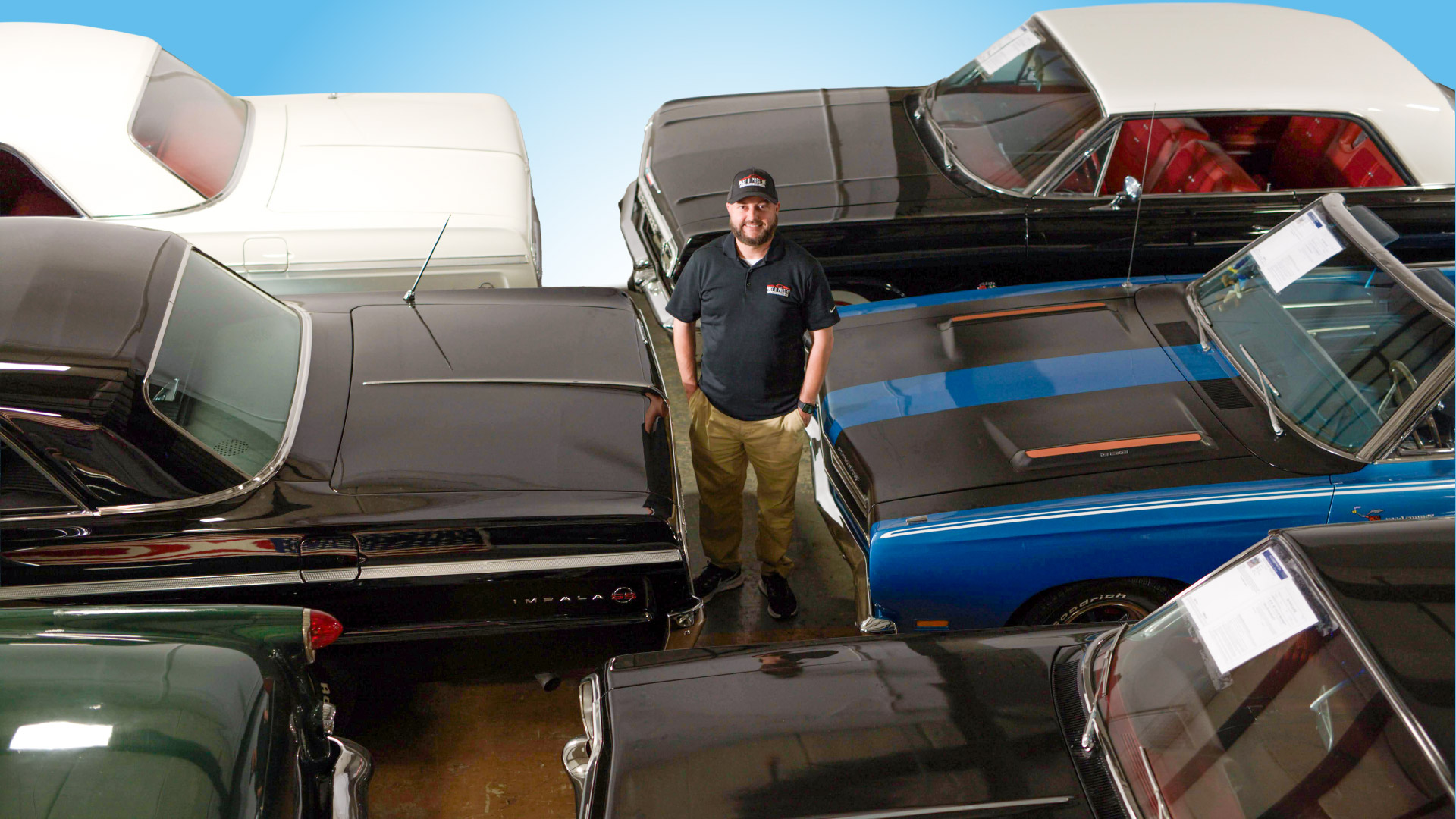
With clear financial data, Jack can evaluate hiring decisions, expansion opportunities, and inventory investments with far greater confidence.
Behind Every Car Is a Story
Ask Jack what he loves most about the business and he won’t talk about margins, inventory, or sales targets. He talks about the hunt. “I love finding special cars,” he says. “And I love connecting the right car with the right person.”
Every vehicle that arrives at the dealership carries a story: an owner who restored it decades ago, a collector who preserved it in pristine condition, or a family who simply loved it for years.
The company prioritizes purchasing cars directly from long-term private owners rather than auctions. “We want cars that people cared about,” Jack says.
Sometimes the stories are surprising.
Recently, Jack discovered a hidden collection of 21 classic cars in Apopka, just minutes from the dealership—vehicles collected over decades by an 82-year-old enthusiast. One of the highlights was a rare, highly optioned 1970 Chevrolet Malibu. “I almost kept it,” he admits with a laugh.
Other stories are more unusual. For example, a shortened Plymouth Duster once passed through the showroom—an oddball vehicle Jack never liked. A YouTuber eventually bought it and attempted to destroy it in viral videos by performing endless burnouts. The car refused to die, turning the entire episode into an unexpected internet spectacle.
Even more remarkable are the buyers. Past & Present Motor Cars regularly sells vehicles nationwide and internationally. One recent customer from the French Riviera purchased a classic Mustang and plans to drive it across the United States on Route 66 to celebrate his birthday.
The combination of great stories, unusual vehicles, and passionate customers has inspired another unexpected opportunity: a television series concept built around the dealership. The show would follow the process of discovering rare vehicles, restoring them, racing them, and ultimately finding them new homes. For Jack, the idea is a natural extension of the business. The stories were always there. The cameras simply help capture them.
Turning Passion Into a Sustainable Business
As Past & Present Motor Cars expanded, however, the company faced a challenge that many fast-growing businesses encounter. The operational side of the business had matured quickly, but the financial systems behind it had not kept pace.
For years, Jack lacked consistent financial visibility. Accounting reports were difficult to interpret, tax preparation often occurred at the last minute, and important business decisions were being made without clear financial benchmarks.
“I knew we were selling cars,” he says. “But we didn’t really understand the rest.”
That changed when Jack met Rachel Siegel, founder of Go Figure Accounting, through a business networking group. The introduction came at the right moment. The company had grown beyond the point where informal financial management was sustainable.
From their first conversation, Jack noticed a different approach. Go Figure did not simply focus on preparing tax returns. Instead, the firm worked to build a financial structure that would support long-term growth.
The first step was organizing the company’s bookkeeping and reporting systems so that Jack could see an accurate financial picture of the business at any time. Reliable monthly financial statements replaced the guesswork that had previously guided many decisions.
With those systems in place, the team began focusing on cash flow strategy and profit planning. Instead of allowing profit to remain an afterthought, the company began allocating revenue more intentionally, ensuring that operational costs, taxes, and long-term investments were properly planned.
Go Figure also introduced proactive tax planning. Rather than scrambling during tax season, Jack now receives ongoing guidance about projected tax obligations and strategies to reduce unnecessary liabilities. That planning provides confidence that major investments or expansions can occur without unexpected financial consequences.
Perhaps most important, the partnership helped Past & Present Motor Cars transition from reactive operations to strategic leadership. With clear financial data, Jack can evaluate hiring decisions, expansion opportunities, and inventory investments with far greater confidence.
The Next Chapter
Eight years after opening a small warehouse dealership, Past & Present Motor Cars is still accelerating.
Today, the dealership is positioned for the next phase of its growth. Jack’s long-term goals include expanding the brand, potentially franchising the business model, and bringing the television concept to a national audience. The company is also continuing to invest in property and infrastructure to support future operations.
For a business that began as a passion project in a small warehouse, the transformation has been significant. The enthusiasm for classic cars remains the heart of the company, but the structure behind it ensures that enthusiasm can support a sustainable enterprise.
Because in the classic car world—and in business—the best stories aren’t just about where something started.
They’re about how long it lasts