
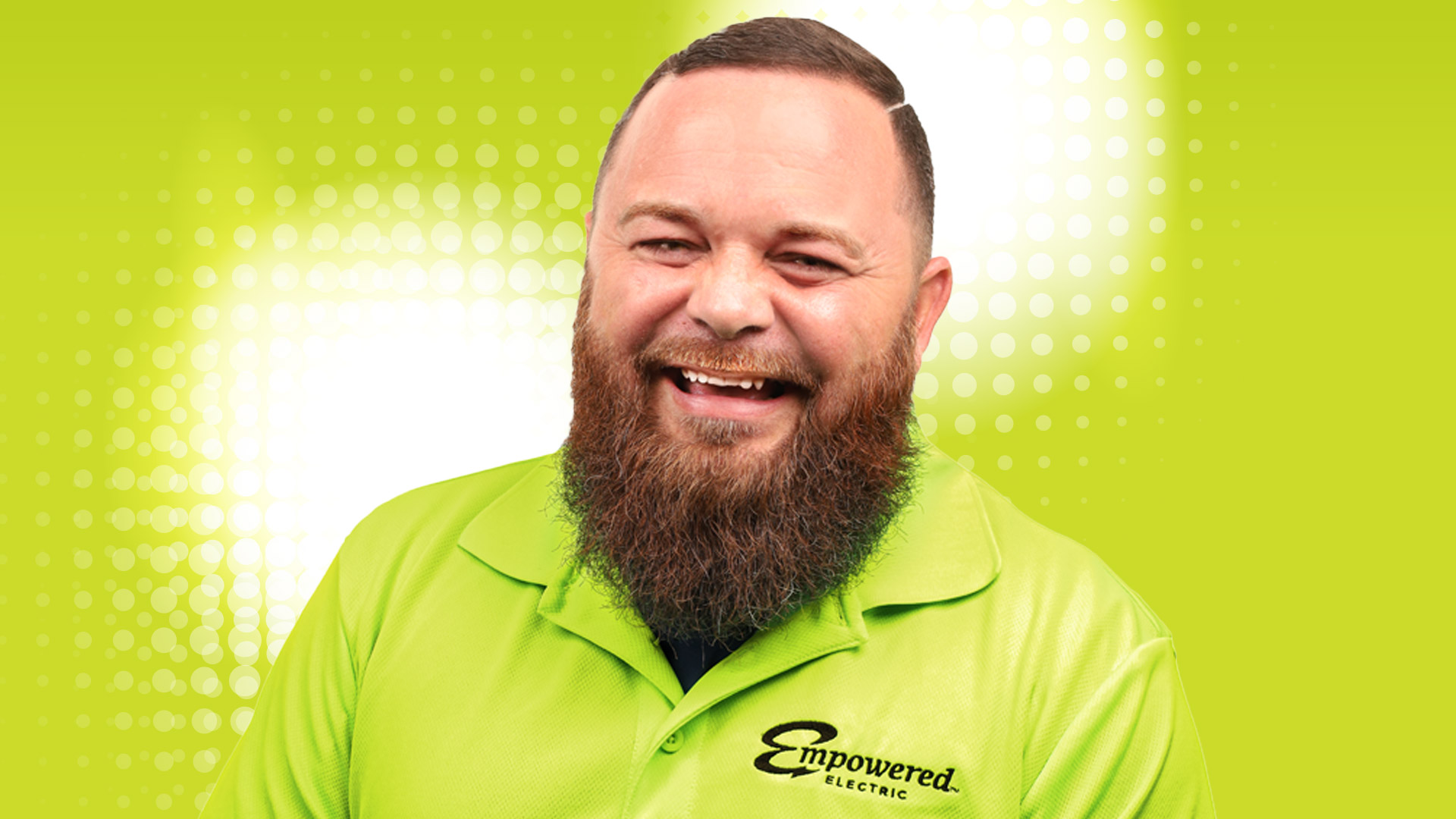
There’s a moment in Billy Harper’s story where you can almost hear the bottom dropping out. He’s standing in his own wreckage—the hurt he’s caused his parents, the lies to girlfriends, the thousands of dollars he’s stolen or wasted, the nights spent high and scrambling for another fix. He calls himself “an addict” without blinking. Heroin, he says. Crack. Alcohol. Theft.
“I probably spent a million dollars of my dad’s money on drugs,” he admits. His dad didn’t argue. He just said, “It’s more than that.”
This is the bleakest kind of inventory, the kind that strips a man bare. Billy doesn’t embellish, and he doesn’t seem ashamed to tell it, either. That’s part of sobriety: no more clinging to the old story, just the truth.
And Billy’s truth is brutal. He once stole electrical panels from Home Depot just to resell them for a quick hit. He overdosed and smashed his F-350 into a school bus. Dealers dragged him behind dumpsters when the dope went sideways. He detoxed in his parents’ shed while they slipped Suboxone under the door like communion bread. He loved heroin with that loathing hunger addicts talk about—the kind of love that empties you out and still demands more.
By all accounts, he should be dead.
But he isn’t.
Four and a half years ago, Billy got sober. And now he runs Empowered Electrical, a million-dollar contracting company in Clermont, Florida, with a crew of seven, a waiting list of jobs, and a vision bigger than just wiring barns or hanging panels. His company name isn’t accidental. Empowered isn’t just what they do—it’s what happened to him.
Motocross, Money, and Mayhem
Billy’s story starts like a lot of Florida boys’—small town, motocross dreams, a family business in the trades. He raced dirt bikes, carried the weight of sponsors and expectations, and worked jobs with his dad, an electrician. But he was restless.
In 2005, he quit mid-shift on a ladder in Groveland. Hurricane Katrina had just hit, and he smelled opportunity. With $10,000 from his grandmother, he bought a truck and started a tree service with his cousin. By 20, he had equipment, billboards, and six-figure revenue.
Then the housing market crashed. Tree jobs dried up. His knees ached from motocross wrecks, and doctors handed him Percocet and Dilaudid. Soon he was buying scripts from friends, then snorting Roxy Blues until his nostrils burned. Cocaine followed. Then heroin.
He remembers the first needle. “Holy crap, that is good,” he thought. “Life changing good.” He says it casually, like remembering the first time you ate steak cooked right. That’s the seduction of heroin—it feels like home until it kills you.
He overdosed twice at his dealer’s house. Both times they dragged him behind the dumpster, left to live or die.
Still, he kept using.
Turns out, bottom isn’t one big crash; it’s a thousand smaller wrecks. For Billy, it came in 2021, in the quietest, saddest way.
He was sitting on the couch in his boxers, weeping. Pixie, his yellow Lab, pressed against his shins and looked at him with eyes so tender he swears she spoke without speaking: I love you. Go get help.
And so he did. It wasn’t his first stint in rehab, but this time was different. He knew it.
He walked into the bedroom and told Rebecca Starling Holt—his partner in both life and relapse—to cancel their biggest job yet, a $13,000 remodel. “Cancel it. I’m going to detox,” he said, and then he cried again. Surrender, plain and terrifying.
Detox was hell. Billy will tell you without flinching: he soiled himself in a meeting, lay on a shower floor unable to move, sweated and puked and cried for days. Rebecca tried to quit at home until she passed out, hit her face on a table, and ended up in the hospital. Both of them were broken open, dragged across the fiery coals of withdrawal.
“I felt something inside of me that had broken,” Billy says. “Broken to be repaired. Surrendered.”
And somehow, by grace and grit and Pixie’s brown eyes, he didn’t use again.
Rachel Siegel and the Math of Redemption
Billy started going to recovery—three, sometimes four meetings a day. Not just the meetings, but the parking lots, where addicts told him survival was possible.
He’d sit in his truck in the mornings, tuned to Z88.3, tears rolling down his face, begging God for help. Not singing along—clinging to the music like a lifeline.
For weeks he couldn’t sleep. Restless legs and racing thoughts drove him to five or six showers a night, pacing the porch, eaten alive by mosquitoes, whispering prayers he didn’t know he believed. But he kept showing up.
When Rebecca’s magnesium crash landed her in the hospital two weeks into sobriety, Billy sat in the waiting room, white-knuckling temptation. He thought he could sneak off and no one would know. But then the thought came: I would know. That was enough.
Grace comes in strange disguises. For Billy, it looked like Pixie the dog. Like Mark, his sponsor who quoted scripture with uncanny precision. Like mosquito-bitten nights that somehow didn’t end in relapse. Like small jobs that barely paid rent but kept his hands busy and his sobriety intact.
It wasn’t magic. It wasn’t fast. But slowly, Billy began to crawl back. One job at a time, then another. A helper. Then a team.
Last year, he founded Empowered Electrical—not a one-man-one-van gig like his father’s, but a company with a bigger vision. “I want to empower people at a much broader level,” Billy says. “If I can transform someone’s day just by holding the door open, then I can teach my technicians to do the same thing. That’s how you spread good things in the world.”
It sounds lofty. But Billy believes it down to the bone. He knows what happens when you withhold light. Now he’s committed to flooding rooms with it.
Nine months in, Empowered was already on track for seven-figure revenue. Jobs stacked up faster than permits could be processed. A crew of seven grew steadily. Setbacks came—sick days, paperwork snarled in bureaucracy, the occasional bad apple. But Billy wasn’t deterred.
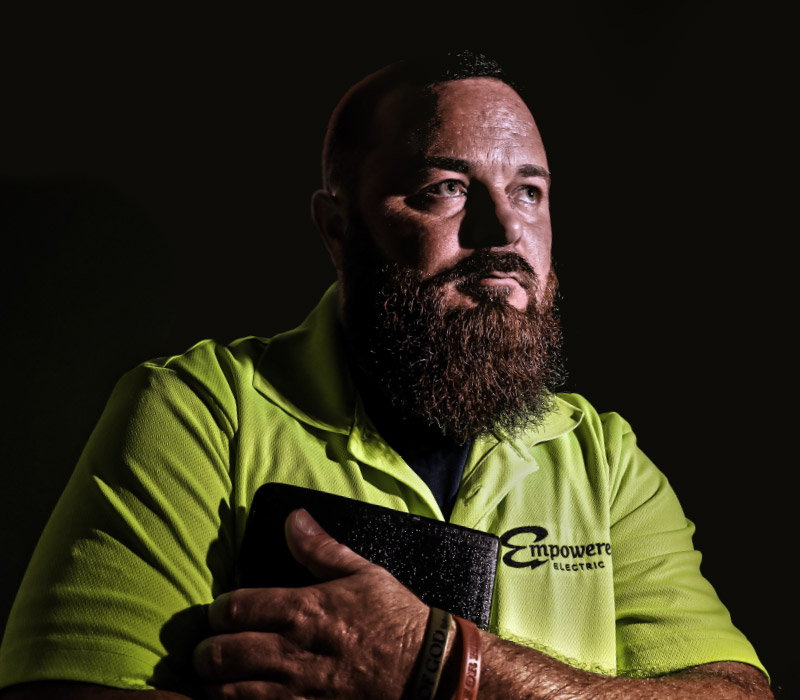
“I felt something inside of me that had broken.
Broken to be repaired. Surrendered.”
And he wasn’t alone.
Billy read Profit First and realized he needed more than an accountant. He needed someone who could help him build guardrails strong enough to withstand both success and his addictive tendencies. “I told a friend, I don’t think you understand—I need the best,” Billy says.
Enter Rachel Siegel and the Go Figure Accounting team—Profit First Accountants of the Year. Exactly the help he didn’t know he needed.
Rachel and her team became more than number-crunchers. They became anchors, mentors, voices of reason when Billy’s passion threatened to outrun his planning. They taught him discipline with money—discipline he’d never had when drugs ruled the math.
This was redemption of a different kind: the addict who once stole from Home Depot now running spreadsheets with integrity, paying his crew, paying himself, planning for growth.
Future Forward
Billy doesn’t chalk any of this up to luck. He says it plain: God’s hands are all over Empowered. He points to Rachel showing up at just the right time, to employees who somehow get it, to customers who don’t just book another job but call back because they want more of the people. “You can see the fingerprints everywhere,” he says.
And here’s the thing: Empowered isn’t just the tidy redemption story of one man. Billy’s building something bigger—a place where the work matters, but the people matter more. A shop where culture actually lifts you. Where the atmosphere is as intentional as the craftsmanship, and kindness is part of the job description right alongside wiring panels and swapping out breaker boxes.
He’s ferocious about protecting that culture. “One bad attitude doesn’t just spoil a meeting,” he says. “It spreads. It can hit thirty people, maybe more, when they carry it home.”
Billy knows this because for years, he was the bad attitude. He remembers the toxicity that followed him like a cloud, how quickly it multiplied. Now he guards Empowered like it’s fragile and holy. Because maybe it is.
The dreams don’t stop there. Empowered’s early success has brought more opportunities—and more responsibility.For Billy, it’s not about expansion for expansion’s sake. He watched big HVAC and electrical companies balloon under private equity, watched culture get gutted, and he refuses to let Empowered become another cautionary tale.
“I don’t want just a business,” he says. “I want a teaching ground. I want guys to leave here better than they came. Not just as electricians, but as men, as dads, as people who walk with integrity and compassion.”
This is where the paradox shows up again: Billy once hollowed himself out chasing heroin and crack, and now he’s intent on filling other people up—with hope, with value, with dignity. If the company is called Empowered, it’s because that’s what he wants everyone who touches it to feel: customers, employees, subcontractors, even competitors.
Scaling is inevitable—more crews, more vans, more jobs—but Billy’s vision is stubbornly intimate. He doesn’t just want electricians who can run wire. He wants electricians who hold doors open, who look people in the eye, who ripple good things into the world. He wants customers to feel the difference in the way Empowered shows up.
He talks about the future with the same grin he uses to talk about his sobriety: wide-eyed, a little incredulous, but sure-footed. He knows what it’s like to live without hope. He’s not going back there, and neither is his company.
Because if grace can show up in a Panera parking lot, in a yellow Lab’s stare, in the hands of a sponsor with the right verse at the right time—then maybe grace can also show up in a work van, on a job site, in the way one technician greets a homeowner. Maybe grace can look like a company.
That’s Billy’s dream for Empowered. Not just to grow bigger, but to grow brighter. To prove that light spreads faster than darkness if you let it. To keep choosing, every single day, to wire hope into the walls.

“I don’t want just a business, I want a teaching ground. I want guys to leave here better than they came. Not just as electricians, but as men, as dads, as people who know how to carry kindness.
Building a Business That Lasts
When I first met Billy, what stood out wasn’t just his vision—it was his urgency. He wanted Empowered Electrical to mean something, and he was willing to put in the work. But passion alone won’t keep a business alive. You need systems. You need boundaries. And you need your finances to tell the truth, even when it’s uncomfortable.
That’s where Profit First comes in. Originally developed by Mike Michalowicz, the framework teaches entrepreneurs to pay themselves and their business first, then operate wisely on what remains. I expanded on those principles through my three Profit First books, each intentionally written for service-based businesses and packed with practical business advice. Billy has read one of them and attended workshops I’ve led on the topic, applying those lessons to Empowered’s financial foundation. Here’s what I’d suggest to any new business owner—Billy included:
1. Start with small percentages. In Billy’s case, we didn’t tell him to stash 20% profit from day one—that would have crushed his cash flow. Instead, we started with 1–2% and built up. It’s like strength training: you don’t bench 200 pounds the first time. You build the muscle over time.
2. Use your books as a mirror, not a mask. A lot of entrepreneurs fall into the trap of hiding from their numbers. They run on gut instinct until payroll bounces or taxes blindside them. The books should tell you the truth every month—where the money’s going, what’s working, what’s waste. The truth is never the enemy. It’s the flashlight in a dark room.
3. Protect your culture like you protect your cash. This isn’t just about money—it’s about people. One toxic hire can drain as much as overspending on a bad truck lease. I tell owners: track your numbers and your culture. Both are assets on your balance sheet, even if only one shows up in QuickBooks.
4. Build margin for grace. Life will happen—permits get delayed, trucks break down, someone gets sick. If every dollar is spoken for, you’ve left no space for grace. Profit First helps you create that margin, so setbacks don’t sink you.
The truth? Most businesses don’t fail because the owner lacks passion. They fail because the owner never learns how to separate personal cash from business cash, or they spend everything that comes in without planning for the future.
Billy is doing the hardest thing: pairing passion with discipline. It’s not glamorous, and it’s not overnight, but it’s why Empowered Electrical isn’t just surviving—it’s building a strong foundation to last. ~ Rachel Siegel